Are You a Leader or Manager?

Leadership chart

Most school districts claim to want to move from good to great, become world class, become a 21st century district, or fill in the slogan blank.  Getting past the cliches (and the fact that we’re 14 years into the 21st century already), effective implementation of these transformations/progressions requires progressive thinking and leadership.  Doing things the way you’ve always done them is not going to vault you to a new status; it will maintain your current status.  As a matter of fact, maintaining while others around you vault forward, relatively speaking, equates to falling behind.

Whether leadership positions are in classrooms responsible for kids, or offices responsible for adults, people look up to you everyday.  Leadership positions tend to be occupied by leaders and managers.  Some differences are:

Leaders… Managers…
empower manage
support creativity & divergent thinking teach “the right way” & make sure everyone knows what to think
trust look over the shoulder
delegate tasks of great responsibility delegate tasks of minor responsibility
ask questions tell the correct answer
seek knowledge from everyone have prior knowledge to impart on everyone
relate to people at work make sure people relate to their work
find big picture solutions provide quick fixes
focus on a few priorities take on many projects at once
assume responsibility and apologize place blame
don’t ask others to do anything they don’t do themselves ask others to do things they don’t do
do what’s right do what keeps them out of trouble
reflect to improve reflect to pat themselves on the back
create a climate of candor intimidate others into agreement
follow through on their word are too busy to follow through on their word
earn respect by giving it expect respect because of their title
find solutions find problems
inspire dishearten

The truth is, the style shows.  Kids know it, parents know it, colleagues know it.  A progressive environment requires a progressive leader.  At the end of the day, leadership is either the reason things do happen, or the reason things do not happen.  Whether it’s kids or adults, challenge yourself as a leader to remove obstacles for them, unlock invisible shackles, eliminate excuses, offer full support, empower, and be the reason things do happen.

I would love to hear more characteristics or your thoughts on leaders and managers.
Do kids have a voice? The power of choice

imagesAs I continue to connect, learn, and grow, I have met some amazing educators.  I attended EdCamp Chicago this past October and had a career changing experience.  The energy was high, passion strong, and enthusiasm contagious!  These educators were taking ownership of their learning, and having fun doing it.  Discussions were rich and engagement was 100%.  It was something I had never seen before!  And then I saw it again last Wednesday…

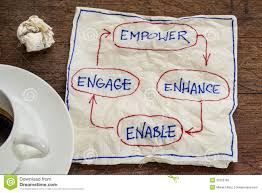
The staff at my school decided to employ the EdCamp model at our staff meeting.  Sure enough, I observed and felt the same results: high energy, strong passion, and contagious enthusiasm.  It is no coincidence that rich discussions ensue and participants fully engage when we are empowered to take ownership of our learning.

Do we provide our kids these same learning opportunities?  Do we allow our kids to have a voice?  Do we grant our kids the power and responsibility of choice?  Do we empower them to take ownership of their learning and be active participants?

Administrators, do we model this for our staffs?  Do we empower our staffs and support and equip them with the resources and drive to engage our kids?

I have done some light research into 20 Time, and would love to hear others’ suggestions and/or experiences employing it.  I would also love to hear from staff and admin who employ EdCamp or other similar models to empower our educators and kids to learn.

images

Limits for Kids: Do we define them or inspire beyond them?

images I had an invigorating conversation with a colleague yesterday.  Upon reflection, I realized it was because the tone, words, and content of the dialogue were galvanizing.  Thoughts were candid.  Suggestions were constructive.  Discussion flowed both ways.  There was a mutual respect.  At the conclusion of the conversation, I began to give some thought to an idea I vowed I never would.  Because I was inspired.  Because our conversation had no limits.

When we engage with our kids, do we define limitations under which we set goals for them to achieve?  Or do we inspire, equip, and support them to drive far beyond any limitation we could possibly define?  Let’s be aware and intentional when we engage with our kids.  That is the key to inspiring meaningful learning.

Evaluation in 2 Simple Steps

teacherevals2big

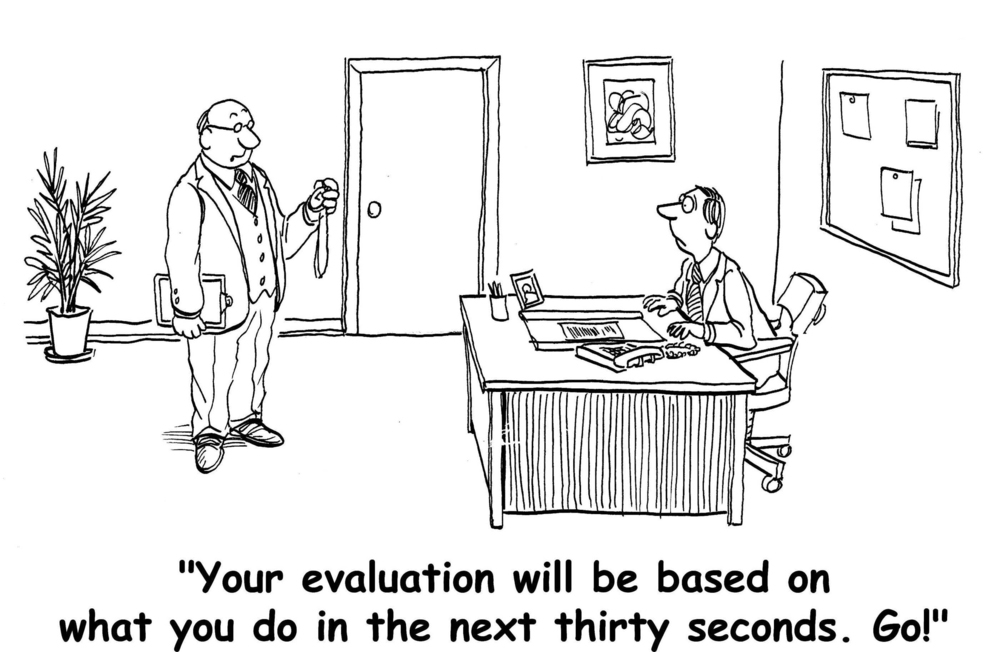
Embarrassing but true, the above cartoon is not far off from many evaluation experiences.  That is one way it can be done; I propose another, which can be completed with two simple steps:

1) Care.
2) See #1.

Evaluation should be a process driven by collaborative discussion that results in desired growth.  Nobody knows you, like you.  Nobody knows you as an educator, like you.  Nobody knows what you do all day everyday with and for kids, like you.  Thus, you should have an opportunity to make a major contribution to your evaluation.

When the evaluator sincerely cares about his staff, evaluation does not happen on cycle, but is a continuous process driven by on-going discussion and observation.  Collaboration provides the opportunity to sync expectations and goals.  Both parties have a shared focus, and can help one another be accurate with a descriptive working document.  When treated as a process, upon arrival of the evaluation due date, the working document can simply be marked “final”.

Evaluation is opportunity for valuable discussion, relationship building, and trust earning.  It should involve meaningful feedback, result in productive growth, and be craved–by both staff and evaluator.  When the evaluator sincerely cares, it shows.  When it shows, staff and evaluator are better for it.  When staff and evaluator are better for it, kids win.  And that should be the goal of evaluation.

collaboration-definition

What if I could do THAT??

On this Thanksgiving Day I am thankful for many things.  One of those is that I get paid to do what I love: teach kids.  Some people choose a job over their passion, while others work side jobs to make ends meet while pursuing their passion.  I consider myself lucky that my job is my passion.

I know why I became an educator.  As a matter of fact, I can tell you the person, exactly what he did, and the exact moment he did it that has led me where I am today.

This is Sam LeDeaux, age 3.  I was in pre-school.  I was…an active child.  You’ll notice the hand in the lower right hand corner of the picture holding me in place, and there was an accompanying voice demanding, “Sam, sit still!”  I often had an adult very close to me at school.  We had 3 teachers, and all students would rotate and interchange–well, everyone but me.  I always had to be with Mr. Doug.  Everywhere I went, Mr. Doug was right there.  Mr. Doug was the “enforcer”, the teacher that got “all of those kids”.  Despite running away from him daily, kicking and swinging, I actually liked Mr. Doug.  As a matter of fact, I would always ask my mom if Mr. Doug could come over for a play date and have dinner with us.

One day, I mustered up the courage to ask Mr. Doug if he’d come over for a play date and dinner, and he said yes.  I couldn’t believe it!  It was going to be a special afternoon.  I lived with just my mom, and you could say we lived very modestly on a tight budget.  However, I wasn’t going to let that prevent this afternoon from being as luxurious as it could be.  Dinner options weren’t plentiful in our house.  I decided to go with macaroni & cheese and hot dogs–no buns, just hot dogs (remember, tight budget).  Mr. Doug came over, we played, and ate macaroni & cheese and hot dogs.  We even used the nice paper plates!

Whoa!  Mr. Doug had come to my house!  I went to school the next day, head up, chest puffed out, strutting my stuff.  I was on top of the world.  That was 34 years ago, and I remember it like it was yesterday.  It drives me to this day, as I always think to myself, “What if I could do that for a kid in my school???”  What if I could make 2 kids feel like that?  Or 5?  Or an entire class?  Or school?  Wow, that would be awesome.

I also think to myself, what if Mr. Doug had declined my invitation?  What if he thought teaching only occurred during school hours in the classroom?  Or what if he thought since he had to follow me around all day and spend every minute of the school day with me there was no way in HE** he was going to spend the evening with me, too?!?  What if he told me yes, then at the last second remembered he had a dentist appointment the following morning, suddenly came into some unforeseen work to get done, and it was raining which would make travel to my house inconvenient and canceled on me thinking I’m only 3 years old and I’d get over it and be fine?  Would I have gotten over it?  Would I have been fine?

I can never know that, but what I do know is that he made me feel special.  He made me feel proud to be me.  He showed me he cared.  He made me feel like I was someone.  And to this day, when things get heavy or I just have one of those days, I remember Mr. Doug, what he did for me, and why I became a teacher.  I used to think about that in reflection (and still do), but now I keep it on a post-it note on my laptop so that I am sure to always remember why I teach kids.  Can I positively engage with a kid today in such a way that will impact and drive what s/he’s doing 34 years from now?  Can I do for my kids what Mr. Doug did for me?  That motivation and desire is what drives my passion for teaching.

photo-4

We all have the opportunity to be somebody’s Mr. Doug.